geo.cbs.umn.edu
Weiblen Lab
Media People Resources Links Publications Reviews
What We Do
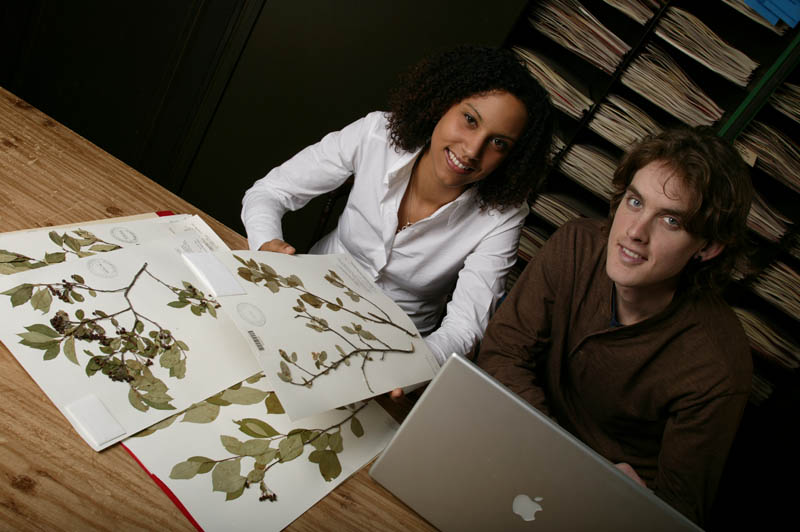
The Weiblen lab studies botany, plant-insect interactions, molecular phylogenetics, population genetics, ecology and taxonomy. Phylogenetic theory, genomic data, and computation have invigorated the search for answers to broad evolutionary problems that have captivated life scientists since Darwin. We combine fieldwork in tropical and temperate ecosystems with DNA technology and the study of museum specimens. Studies of tropical forest dynamics, community ecology, and coevolution in fig pollination are topics of long-term research. Recent interests include Cannabis genetics, biotic responses to climate change, floristics, and biodiversity conservation.
Why Our Website Sucks
The website was developed in 2001 and has resisted technological "upgrades" until now. No fancy side bars, animations or other gimmicks. No black box "content management system" stands between you and raw html. Brutalism in web design is coming back into fashion as a reaction to the frivolity of more recent trends. The appearance and content of the site are not the official position of the University of Minnesota. They are products of academic freedom.
How You Can Contribute
Are you interested in supporting our research? We established a fund for this purpose with the University of Minnesota Foundation. The "Weiblen Lab Fund" code is 20662. Click here and enter the fund code to make a contribution.
Media
How This Hemp is the Future: Minnesota Wild Hemp Winona's Hemp and the Anishinaabe Agriculture Institute have teamed up the University of Minnesota. Brandon Garlow explains.
Growth of THC Edibles Kaomi Lee of Twin Cities Public Television features our findings in a story about the rapid growth of newly Minnesota-legal gummies infused with THC.
Hemp and the New Green Revolution Winona LaDuke on our collaborative work in the Bemidji Pioneer.
Cannabis Genetics: Tech-Saavy or Taboo? Addison Herron-Wheeler writes about our work in High Times magazine.
Globalization, the bane of traditional languages and skills A study of indigenous knowledge in Papua New Guinea.
Research shows that, genetically, high-CBD 'hemp' plants are mostly marijuana Sequencing the Cannabis genome. Among the top 10 most-read New Phytologist articles of the year!
Delta 8: A legal 'Weed Light'? Tom Lyden investigates for Fox 9 News.
A genetic test predicts THC versus CBD in Cannabis plants Commentary on a recent study of 'Ditch Weed'. Among the most downloaded during the 12 months since publication!Is CBD the miracle drug it's made out to be? MPR News with Angela Davis.
First Person: George Weiblen Q&A with one of the first plant biologists registered to study Cannabis.
Wild, Wild Weed Tom Lyden investigates for Fox 9 News.
Grow with KARE: Treasure trove discovered at Bell Museum Behind the scenes at the Bell Museum.
College of Biological Sciences 2019 Commencement George Weiblen addresses the Class of 2019.
Swire PNG Rainforest Study Parterning with indigenous scientists in Papua New Guinea.
2017 President's Community Engaged Scholar Citizen science in Papua New Guinea.
Hemp legally harvested in Minnesota for the first time in over 60 years Channel 5 KSTP News.
El Nino meets the rain forest New Yorker article by Sam Knight.
The incredible plan to make money grow on trees Guardian article by Sam Knight.
Diversity in nature A sabbatical experiment in Sydney, Australia. Story by George Weiblen. Photos by Jamie Plaza.
Saving the forest for the trees The high stakes of Weiblen's research in Papua New Guinea. Story by Meleah Maynard. Photos by George Weiblen.
George's Jungle An effort to save some of the planet’s most critical habitat leads to creating an international research station. Story by Nina Sheperd.
Wanang Elementary How did conservationists open a rural school in Papua New Guinea? PhD alumnus Bridget Henning explains.
George the Scientist High school students describe Weiblen's research on fig trees. A Bell Museum production.
Weeding out marijuana George Weiblen describes past research on Cannabis genetics. See also Tightrope Walker


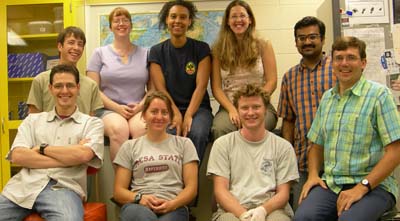
George Weiblen (principal investigator)
Jonathan (JP) Wenger (Research Associate)
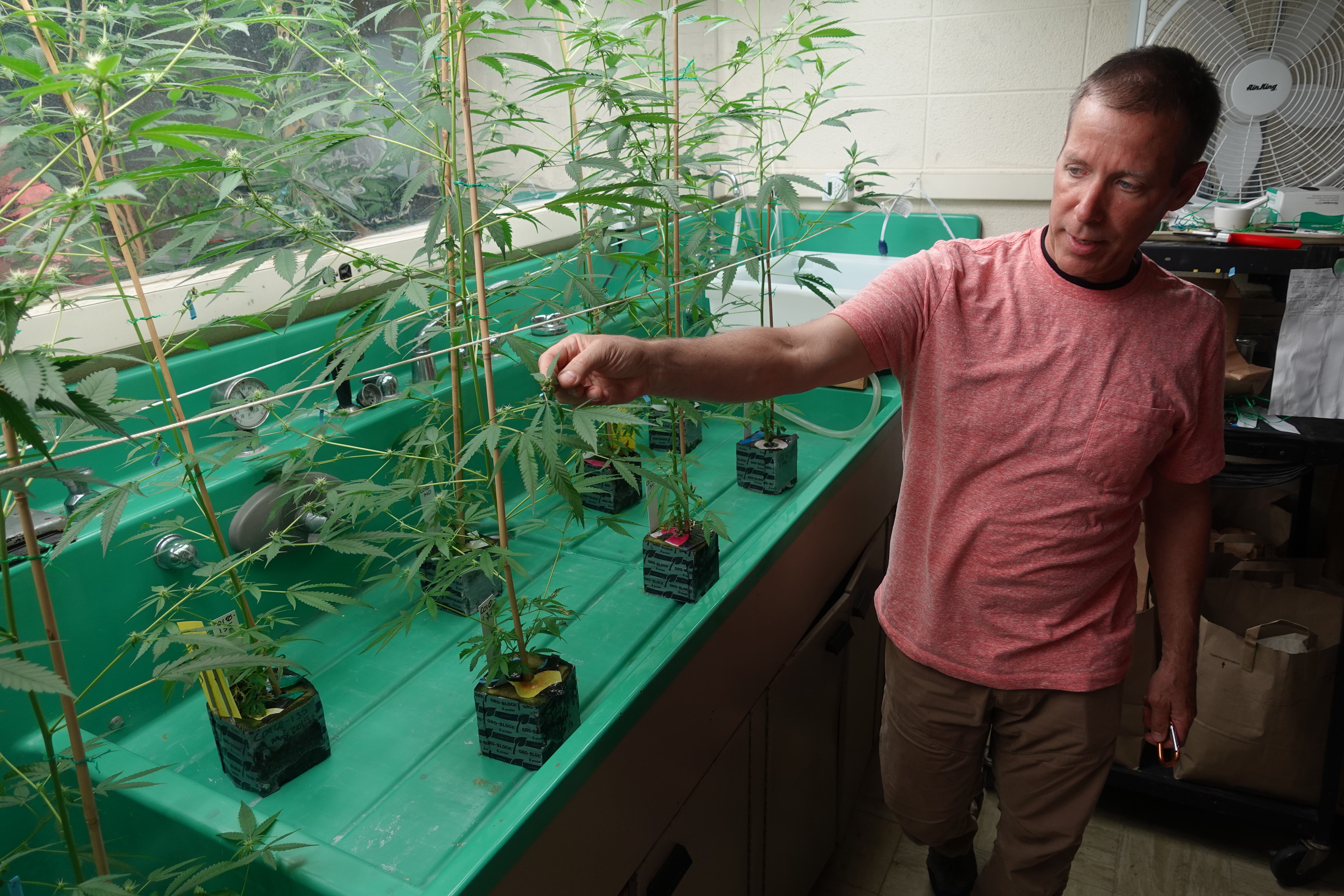
Zacky Ezedin (PhD alumnus)
Joe Smeenge (laboratory technician)

Clemon Dabney (PhD alumnus)

Nick Talmo (laboratory technician alumnus)
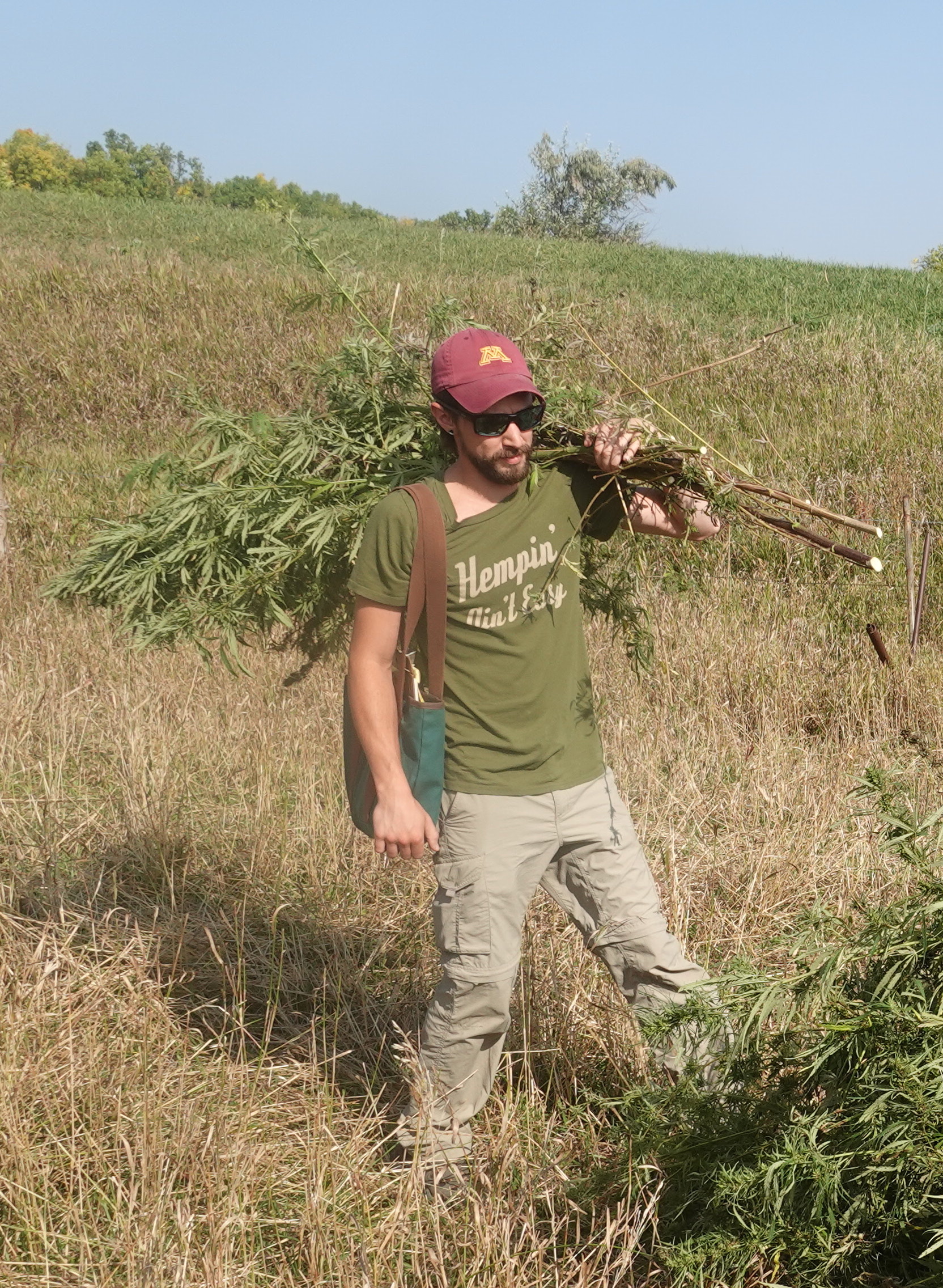
Bridget Henning (PhD alumunus)
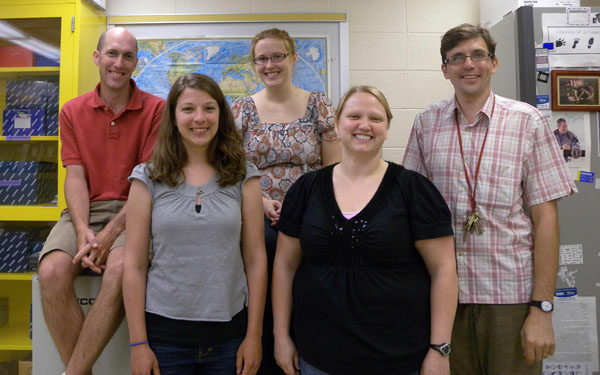
Erin Treiber (PhD alumnus)
Andre Gaglioti (international scholar alumnus)

John Vincent (PhD alumnus)

Kathy Craft (post doc alumnus)
Nina Ronsted (post doc alumnus)
Nyree Zerega (post doc alumnus)
Shannon Datwyler (post doc alumnus)
Annika Moe (PhD alumnus)
Tim Whitfeld (PhD alumnus)
Gregory Setliff (PhD alumnus)
Wendy Clement (PhD alumnus)
Summer Silvieus (PhD alumnus)

Kirsten Bovee (MSc alumnus)

Erika Blackwell, Gaurav Kandlikar, Alex Hooker, Nathan Mueller & Stephanie Swenson (undergraduate alumni)
•Minnesota Biodiversity Atlas: http://bellatlas.umn.edu
•Interactive key to woody plants of Minnesota: http://geo.cbs.umn.edu/treekey_v506.zip
•Marijuana DNA Testing Services: CannabisDNA.html
•WIAD Conservation: A Guidebook to Traditional Knowledge and Biodiversity: http://geo.cbs.umn.edu/WIAD_conservation_guidebook.pdf
•Sisseton Wahpeton Oyate Hemp Economic Feasibility Study 1: http://geo.cbs.umn.edu/SWO_hemp_phase1_final_report_small.pdf
•Sisseton Wahpeton Oyate Hemp Economic Feasibility Study 2: http://geo.cbs.umn.edu/SWO_hemp_phase2_report_small.pdf
•Caterpillars feeding on New Guinea plants (online images & host records): http://www.entu.cas.cz/png/caterpillars/
•Bell Museum: http://bellmuseum.umn.edu/
•Department of Plant & Microbial Biology: https://cbs.umn.edu/academics/departments/pmb
•New Guinea Binatang Research Center: http://www.entu.cas.cz/png/index.html
•The Rocky Mountain Biological Laboratory: http://www.rmbl.org/index.html
•Angiosperm Phylogeny: http://www.mobot.org/MOBOT/Research/APweb/welcome.html
•International Plant Names Index: http://www.ipni.org/ipni/plantnamesearchpage.do
•The Plant List: http://www.theplantlist.org/
•Plants of Papua New Guinea: http://www.pngplants.org
•Ants of Papua New Guinea: http://www.newguineants.org/
•Fig Web: www.figweb.org
(Select a title to download a .pdf file)
• Darwell, C. T., D. Souto-Vilarós, J. Michalek, S. Boutsi, B. Isua, M. Sisol, T. Kuyaiva, G. D. Weiblen, V. Křivan, V. Novotny, and S. T. Segar. 2022. Predicting distributions of Wolbachia strains through host ecological contact -Who's manipulating whom? Ecology & Evolution doi: 10.1002/ece3.8826.
• Piponiot, C., G. D. Weiblen & 58 other authors. 2022. Distribution of biomass dynamics in relation to tree size in forests across the world. New Phytologist 234:1664-1677.
• Treiber, E., M. F. Torres, P. C. Zalamea, S. Madriñán, and G. D. Weiblen. 2022. Molecular systematics, species concepts, and myrmecophytism in Cecropia (Cecropieae: Urticaceae): Insights from Restriction-Site Associated DNA. Systematic Botany 47:457–466.
•Basset, Y., L. R. Jorge, P. T. Butterill, G. P. A. Lamarre, C. Dahl, R. Ctvrtecka, S. Gripenberg, O. T. Lewis, H. Barrios, J. W. Brown, S. Bunyavejchewin, B. A. Butcher, A. I. Cognato, S. J. Davies, O. Kaman, P. Klimes, M. Knížek, S. E. Miller, G. E. Morse, V. Novotny, P. N., P. Pramual, D. L. J. Quicke, W. Sakchoowong, R. Umari, E. J. Vesterinen, G. D. Weiblen, S. J. Wright, and S. Segar. 2021. Host specificity and interaction networks of insects feeding on seeds and fruits in tropical rainforests. Oikos 130:1462–1476.
•Davies, S. J., and G. D. a. Weiblen. 2021. ForestGEO: Understanding forest diversity and dynamics through a global observatory network. Biological Conservation 253: doi.org/10.1016/j.biocon.2020.108907.
•Fibich, P., V. Novotny, S. Ediriweera, S. Gunatilleke , N. Gunatilleke, K. Molem, G. D. Weiblen, and J. Leps. 2021. Common spatial patterns of trees in various tropical forests: Small trees are associated with increased diversity at small spatial scales. Journal of Ecology. doi: 10.1002/ece3.7640.
•Grassa, C. J., G. D. Weiblen, J. P. Wenger, C. Dabney, S. G. Poplawski, T. Motley, T. P. Michael, and C. J. Schwartz. 2021. A new Cannabis genome assembly associates elevated cannabidiol (CBD) with hemp introgressed into marijuana. New Phytologist doi: 10.1111/nph.17243.
•Hazell, R. J., K. Chmel, J. Riegert, L. Paul, B. Isua, G. S. Kaina, P. Fibich, K. Molem, A. J. A. Stewart, M. R. Peck, G. D. Weiblen, and V. Novotny. 2021. Spatial scaling of plant and bird diversity from 50 to 10,000 ha in a lowland tropical rainforest. Oecologia 196:101–113.
•Kik, A., M. Adamec, A. Y. Aikhenvald, J. Bajzekova, N. Baro, C. Bowern, R. K. Colwell, P. Drozd, P. Duda, S. Ibalim, L. R. Jorge, M. Mogia, B. Ruli, K. Sam, H. Sarvasy, S. Saulei, G. D. Weiblen, J. Zrzavy, and N. Novotny. 2021. Language and ethnobiological skills decline precipitously in Papua New Guinea, the world’s most linguistically diverse nation. Proceedings of the National Academy of Sciences 118: doi.org/10.1073/pnas.2100096118.
•Mottl, O., J. Yombai, N. Novotny, M. Leponce, G. D. Weiblen, and P. Klimes. 2021. Inter-specific aggression generates ant mosaics in canopies of primary tropical rainforest. Oikos 130:1087–1099.
• Novotny, N., S. E. Miller, J. Hrcek, L. Baje, Y. Basset, O. T. Lewis, A. J. A. Stewart, and G. D. Weiblen. 2021. Correction. American Naturalist 198:doi.org/10.1086/715499.
•Zhong, L., G. D. Weiblen, and authors. 2021. Arbuscular mycorrhizal trees influence the latitudinal beta-diversity gradient of tree communities in forests worldwide. Nature Communications doi.org/10.1038/s41467-021-23236-3.
•Bernard, J., K. C. Brock, V. Tonnell, S. K. Walsh, J. P. Wenger, D. Wolkis, and G. D. Weiblen. 2020. New species assemblages disrupt obligatory mutualisms between figs and their pollinators. Frontiers in Ecology and Evolution 8:doi: 10.3389/fevo.2020.564653. Supplementary Information
•Camara-Leret, R., & 99 authors including Ezedin, Z. and G. D. Weiblen. 2020.New Guinea has the world's richest island flora. Nature 579-583:579-583.
•Clement, W. L., S. Bruun-Lund, A. Cohen, F. Kjellberg, G. D. Weiblen, and N. Ronsted. 2020. Evolution and classification of figs (Ficus, Moraceae) and their close relatives (Castilleae) united by involucral bracts. Botanical Journal of the Linnean Society 193:316-339.
•Mottl, O., P. Fibich, P. Klimes, M. Volf, R. Tropek, K. Anderson-Teixeira, J. Auga, T. Blair, P. Butterill, G. Carscallen, E. Gonzalez-Akre, A. Goodman, O. Kaman, G. P. A. Lamarre, M. Libra, M. E. Losada, M. Manumbor, S. E. Miller, K. Molem, G. Nichols, N. S. Plowman, C. Redmond, C. L. Seifert, J. Vrana, G. D. Weiblen, and N. Novotny. 2020. Spatial covariance of herbivorous and predatory guilds of forest canopy arthropods along a latitudinal gradient. Ecology Letters 23:1499-1510.
•Souto-Vilaros, D., M. Houadria, J. Michalek, M. Sisol, B. Isua, T. Kuyaiva, G. D. Weiblen, and S. Segar. 2020. Contrasting patterns of fig wasp communities along Mt. Wilhelm, Papua New Guinea. Biotropica 52:323-334.
•Volf, M., J. Laitila, J. Kim, L. Sam, K. Sam, B. Isua, M. Sisol, C. W. Wardhaugh, S. E. Miller, G. D. Weiblen, J. P. Salminen, V. Novotny, and S. T. Segar. 2020. Compound specific trends drive an elevational increase of chemical defenses in Ficus. Journal of Chemical Ecology 46:442-454.
•Wenger, J. P., C. Dabney, C. Chandra, M. Radwan, C. G. Majumdar, M. A. ElSohly, and G. D. Weiblen. 2020. Validating a predictive model of cannabinoid inheritance with feral, clinical and industrial Cannabis sativa L. American Journal of Botany. 107: 1423-1432.
•Dahl, C., R. Ctvrtecka, S. Gripenberg, O. T. Lewis, S. T. Segar, P. Klimes, K. Sam, D. Rinan, J. Filip, R. Lilip, P. Kongnoo, M. Panmeng, S. Putnaul, M. Reungaew, M. Rivera, H. Barrios, S. J. Davies, S. Bunyavejchewin, J. S. Wright, G. D. Weiblen, V. Novotny, and Y. Yves Basset. 2019. The insect-focused classification of fruit syndromes in tropical rainforests: an inter-continental comparison. Biotropica, 51, 39-49.
•Ezedin, Z., and G. D. Weiblen. 2019. Additions and changes to Ficus (Moraceae) in New Guinea with comments on the world's largest fig. Gardens' Bulletin Singapore 71, 199-218.
•Menge, D. N. L., R. A. Chisholm, S. J. Davies, K. A. Salim, D. Allen, M. Alvarez, N. Bourg, W. Y. Brockelman, S. Bunyavejchewin, N. Butt, M. Cao, W. Chanthorn, W. Chao, K. Clay, R. Condit, S. Cordell, J. B. da Silva, H. S. Dattaraja, A. C. de Andrade, A. A. de Oliveira, J. den Ouden, M. Drescher, C. Fletcher, C. P. Giardina, C. V. Gunatilleke, I. A. U. N. Gunatilleke, B. C. H. Hau, F. He, R. Howe, C. Hsieh, S. P. Hubbell, F. M. Inman-Narahari, P. A. Jansen, D. J. Johnson, L. S. Kong, K. Kral, C. Ku, J. Lai, A. J. Larson, X. Li, Y. Li, L. Lin, Y. Lin, S. Liu, S. K. Y. Lum, J. A. Lutz, K. Ma, Y. Malhi, S. McMahon, W. McShea, X. Mi, M. Morecroft, J. A. Myers, A. Nathalang, V. Novotny, P. Ong, D. A. Orwig, R. Ostertag, G. Parker, R. P. Phillips, K. A. Rahman, L. Sack, W. Sang, G. Shen, A. Shringi, J. Shue, S. Su, R. Sukumar, I. Sun, H. S. Suresh, S. Tan, S. C. Thomas, P. S. Toko, R. Valencia, M. I. Vallejo, A. Vicentini, T. Vrska, B. Wang, X. Wang, G. D. Weiblen, A. Wolf, H. Xu, S. Yap, L. Zhu, and T. Fung. 2019. Patterns of nitrogen-fixing tree abundance in forests across Asia and America. Journal of Ecology. 109, 2598-2610.
•Lisner, A., G. Kaina, M. Sisol, P. Fibich, V. Novotny, G. D. Weiblen, and J. Leps. 2019. Determinants of Piper (Piperaceae) climber composition in a lowland tropical rainforest in New Guinea. Folia Geobotanika doi: 10.1007/s12224-018-9334-3.
•Redmond, C. M., J. Auga, B. Gewa, S. Segar, S. E. Miller, K. Molem, G. D. Weiblen, P. Butterill, G. Maiah, A. Hood, M. Volf, L. R. Jorge, Y. Basset, and V. Novotny. 2019. Plant-herbivore interaction networks along a successional chronosequence in a tropical montane forest. Ecography. DOI: 10.1111/ecog.03849.
•Souto-Vilaros, D., D. Machac, J. Michalek, C. Darwell, S. Mentap, T. Kuyaiva, B. Isua, G. D. Weiblen, V. Novotny, and S. Segar. 2019 Faster speciation of fig wasps than their host figs leads to decoupled speciation dynamics: snapshots across the speciation continuum. Molecular Ecology. 28, 3958-3976.
•Volf, M., P. Klimes, G. Lamarre, C. Redmond, C. L. Seifert, T. Abe, J. Auga, K. Anderson-Teixeira, Y. Basset, S. Beckett, P. T. Butterill, P. Drozd, E. Gonzales, O. Kaman, N. Kamata, B. Laird-Hopkins, M. Libra, M. Manumbor, S. E. Miller, K. Molem, O. Mottl, M. Murakami, N. S. Plowman, P. Pyszko, M. Sigut, J. Sipos, R. Tropek, G. D. Weiblen, and V. Novotny. 2019. Quantitative assessment of arthropod-plant interactions in forest canopies: a plot-based approach. PLoS ONE:doi.org/10.1371/journal.pone.0222119.
•Basset, Y., C. Dahl, R. Ctvrtecka, S. Gripenberg, O. T. Lewis, S. T. Segar, P. Klimes, H. Barrios, J. W. Brown, S. Bunyavejchewin, B. A. Butcher, A. I. Cognato, S. Davies, O. Kaman, M. Knizek, S. E. Miller, G. E. Morse, V. Novotny, N. Pongpattananurak, P. Pramual, D. L. J. Quicke, R. K. Robbins, W. Sakchoowong, M. Schutze, E. J. Vesterinen, W. Wang, Y. Y. Wang, G. D. Weiblen, and J. S. Wright. 2018. A cross-continental comparison of assemblages of seed and fruit-feeding insects in tropical rainforests: faunal composition and rates of attack. Journal of Biogeography. 45, 1395-1407.
•Chu, C., J. Lutz, K. Kral, T. Vrska, X. Yin, J. Myers, I. Abiem, A. Alonso, N. Bourg, D. Burslem, M. Cao, H. Chapman, R. Condit, S. Fang, G. Fischer, L. Gao, Z. Hao, B. Hau, Q. He, A. Hector, S. Hubbell, M. Jiang, G. Jin, D. Kenfack, J. Lai, B. Li, X. Li, Y. Li, J. Lian, L. Lin, Y. Liu, Y. Liu, Y. Luo, K. Ma, W. McShea, H. Memiaghe, X. Mi, M. Ni, M. O'Brien, A. Oliveira, D. Orwig, G. Parker, X. Qiao, H. Ren, G. Reynold, W. Sang, G. Shen, Z. Su, X. Sui, I. Sun, S. Tian, B. Wang, X. Wang, X. Wang, Y. Wang, G. D. Weiblen, S. Wen, N. Xi, W. Xiang, H. Xu, K. Xu, W. Ye, B. Zhang, J. Zhang, X. Zhang, Y. Zhang, K. Zhu, J. Zimmerman, D. Storch, J. Baltzer, K. Anderson-Teixeira, G. Mittelbach, and F. He. 2018. Direct and indirect effects of climate on richness drive the latitudinal diversity gradient in forest trees. Ecology Letters. DOI: 10.1111/ele.13175
•LaManna, J. A., S. A. Mangan, A. Alonso, N. A. Bourg, W. Y. Brockelman, S. Bunyavejchewin, L. Chang, J. Chiang, G. B. Chuyong, K. Clay, R. Condit, S. Cordell, S. J. Davies, T. J. Furniss, C. P. Giardina, I. A. U. N. Gunatilleke, C. V. S. Gunatilleke, F. He, R. W. Howe, S. P. Hubbell, C. Hsieh, F. M. Inman-Narahari, D. Janík, D. J. Johnson, D. Kenfack, L. Korte, K. Kral, A. J. Larson, J. A. Lutz, S. M. McMahon, W. J. McShea, H. R. Memiaghe, A. Nathalang, V. Novotny, P. S. Ong, D. A. Orwig, R. Ostertag, G. G. Parker, R. P. Phillips, L. Sack, I. Sun, J. S. Tello, D. W. Thomas, B. L. Turner, D. M. V. Díaz, T. Vrska, G. D. Weiblen, A. Wolf, S. Yap, and J. A. Myers. 2018 B. Response to Comment on “Plant diversity increases with the strength of negative density dependence at the global scale” Science 360:eaar3824.
•LaManna, J. A., S. A. Mangan, A. Alonso, N. A. Bourg, W. Y. Brockelman, S. Bunyavejchewin, L. Chang, J. Chiang, G. B. Chuyong, K. Clay, R. Condit, S. Cordell, S. J. Davies, T. J. Furniss, C. P. Giardina, I. A. U. N. Gunatilleke, C. V. S. Gunatilleke, F. He, R. W. Howe, S. P. Hubbell, C. Hsieh, F. M. Inman-Narahari, D. Janík, D. J. Johnson, D. Kenfack, L. Korte, K. Kral, A. J. Larson, J. A. Lutz, S. M. McMahon, W. J. McShea, H. R. Memiaghe, A. Nathalang, V. Novotny, P. S. Ong, D. A. Orwig, R. Ostertag, G. G. Parker, R. P. Phillips, L. Sack, I. Sun, J. S. Tello, D. W. Thomas, B. L. Turner, D. M. V. Díaz, T. Vrska, G. D. Weiblen, A. Wolf, S. Yap, and J. A. Myers. 2018 A. Response to Comment on “Plant diversity increases with the strength of negative density dependence at the global scale”. Science 360:eaar3824.
•Lutz, J. A., T. J. Furniss, D. J. Johnson, S. J. Davies, D. Allen, A. Alonso, K. Anderson-Teixeira, A. Andrade, J. Baltzer, K. M. L. Becker, E. M. Blomdahl, N. A. Bourg, S. Bunyavejchewin, D. F. R. P. Burslem, C. A. Cansler, K. Cao, M. Cao, D. Cardenas, L.-W. Chang, K.-J. Chao, W.-C. Chao, J.-M. Chiang, C. Chu, G. B. Chuyong, K. Clay, R. Condit, S. Cordell, H. S. Dattaraja, A. Duque, D. Escobar, C. E. N. Ewango, G. A. Fisher, C. Fletcher, J. A. Fruend, C. Giardina, S. J. Germain, G. S. Gilbert, Z. Hao, T. Hart, B. C. H. Hau, F. He, A. Hector, R. W. Howe, C.-F. Hsieh, Y.-H. Hu, S. P. Hubbell, F. M. Inman-Narahari, A. Itoh, D. Janik, A. R. Kassim, D. Kenfack, L. Kortee, K. Kral, A. J. Larson, Y.-D. Li, Y. Lin, S. Liu, S. Lum, K. Ma, J.-R. Makana, Y. Malhi, S. M. McMahon, W. J. McShea, H. R. Memiaghe, X. Mi, M. Morecroft, P. M. Musili, J. A. Myers, V. Novotny, A. de Oliveira, P. Ong, D. A. Orwig, R. Osterag, G. G. Parker, R. Patankar, R. P. Phillips, G. Reynolds, L. Sack, G.-Z. M. Song, S.-H. Su, R. Sukumar, I.-F. Sun, H. S. Suresh, M. E. Swanson, S. Tan, D. W. Thomas, J. Thompson, M. Uriarte, R. Valencia, A. Vicentine, T. Vrska, X. Wang, G. D. Weiblen, A. Wolf, S.-H. Wu, H. Xu, T. Yamakura, S. Yap, and J. K. Zimmerman. 2018. Global importance of large-diameter trees. Global Ecology and Biogeography 45:849-864.
•Sreekar, R., M. Katabuch, A. Nakamura, R. T. Corlett, J. W. F. Slik, C. Fletcher, F. He, G. D. Weiblen, G. Shen, H. Xu, I. Sun, K. Cao, K. Ma, L. Chang, M. Cao, M. Jiang, I. A. U. N. Gunatilleke, P. Ong, S. Yap, C. V. S. Gunatilleke, V. Novotny, W. Y. Brockelman, W. Xiang, X. Mi, X. Li, X. Wang, X. Qiao, Y. Li, S. Tan, R. Condit, R. D. Harrison, and L. P. Pin Koh. 2018. Spatial scale changes the relationship between beta diversity, species richness and latitude. Royal Society Open Science. DOI: 10.1098/rsos.181168
•Souto-Vilaros, D., M. Proffit, M. Rindos, M. Sisol, T. Kuyaiva, J. Michalek, C. Darwell, M. Hossaert-Mckey, G. D. Weiblen, V. Novotny, and S. Segar. 2018. Reproductive isolation along an elevational gradient mediated by floral scent and pollinator compatibility in the fig and fig-wasp mutualism. Journal of Ecology. DOI: 10.1111/1365-2745.12995.
•Vincent, J. B., B. L. Turner, C. Alok, V. Novotny, G. D. Weiblen, and T. J. S. Whitfeld. 2018. Tropical forest dynamics in unstable terrain: an example from New Guinea. Journal of Tropical Ecology 34:157-175.
•Volf, M., S. T. Segar, S. E. Miller, B. Isua, M. Sisol, G. Aubona, P. Simek, M. Moos, J. Laitila, J. Kim, J. Zima, J. Rota, G. D. Weiblen, S. Wossa, J. P. Salminen, Y. Basset, and V. Novotny. 2018. Community structure of insect herbivores is driven by conservatism, escalation and divergence of defensive traits in Ficus. Ecology Letters 21:83-92.
•Jorge, L. R., V. Novotny, S. Segar, G. D. Weiblen, S. E. Miller, Y. Basset, and T. M. Lewinsohn. 2017. Trophic specialization in a phylogenetic context: a robust comparison of herbivorous guilds. Oecologia 185, 551-559.
•LaManna, J. A., S. A. Mangan, A. Alonso, N. A. Bourg, W. Y. Brockelman, S. Bunyavejchewin, L. Chang, J. Chiang, G. B. Chuyong, K. Clay, R. Condit, S. Cordell, S. J. Davies, T. J. Furniss, C. P. Giardina, I. A. U. N. Gunatilleke, C. V. S. Gunatilleke, F. He, R. W. Howe, S. P. Hubbell, C. Hsieh, F. M. Inman-Narahari, D. Janík, D. J. Johnson, D. Kenfack, L. Korte, K. Kral, A. J. Larson, J. A. Lutz, S. M. McMahon, W. J. McShea, H. R. Memiaghe, A. Nathalang, V. Novotny, P. S. Ong, D. A. Orwig, R. Ostertag, G. G. Parker, R. P. Phillips, L. Sack, I. Sun, J. S. Tello, D. W. Thomas, B. L. Turner, D. M. V. Díaz, T. Vrska, G. D. Weiblen, A. Wolf, S. Yap, and J. A. Myers. 2017. Plant diversity increases with the strength of negative density dependence at the global scale. Science 356, 1389-1392.
•Segar, S. T., M. Volf, B. Isua, M. Sisol, C. M. Redmond, M. E. Rosati, B. Gewa, K. Molem, C. Dahl, J. D. Holloway, Y. Basset, S. E. Miller, G. D. Weiblen, J. P. Salminen, and V. Novotny. 2017. Variably hungry caterpillars: predictive models and foliar chemistry suggest how to eat a rainforest. Proceedings of the Royal Society B-Biological Sciences. 284, 20171803.
•Weiblen, G. D., and J. P. Wenger. 2016. Commentary on complex variability within the THCA and CBDA synthase genes in Cannabis species. 2016. . Journal of Forensic Investigation, 4, 1.
•Ctvrtecka, R., K. Sam, S. E. Miller, G. D. Weiblen, and V. Novotny. 2016. Fruit sizes and the structure of frugivorous communities in a New Guinea lowland rainforest. Austral Ecology 41, 228-237.
•Fibich, P., J. Leps, V. Novotny, P. Klimes, J. Tesitel, K. Molem, K. Damas, and G. D. Weiblen. 2016. Spatial patterns of tree species distribution in a New Guinea primary and secondary lowland rain forest. Journal of Vegetation Science 27, 328-339.
•Treiber, E. L., A. Gaglioti, S. Neto, S. Madrinan, and G. D. Weiblen. 2016. Phylogeny of Cecropieae (Urticaceae) and the evolution of an ant-plant mutualism. Systematic Botany 41, 56-66.
•Vincent, J. B., G. D. Weiblen, and G. May. 2016. Host specificity and beta diversity of foliar fungal endophytes in New Guinea rainforest trees. Molecular Ecology 25, 825-841.
•Forister, M. L., V. Novotny, A. K. Panorska, L. Baje, Y. Basset, P. T. Butterill, L. Cizek, P. D. Coley, F. Dem, I. R. Diniz, P. Drozd, M. Fox, A. Glassmire, R. Hazen, J. Hrcek, J. Jahner, O. Kajman, T. Kozubowski, T. A. Kursar, O. T. Lewis, J. T. Lill, R. J. Marquis, S. E. Miller, H. C. Morais, M. Murakami, N. Pardikes, R. E. Rickleffs, M. S. Singer, A. M. Smilanich, J. O. Stireman, S. Villamarin-Cortez, S. Vodka, M. Volf, D. L. Wagner, T. R. Walla, G. D. Weiblen, and L. A. Dyer. 2015. The global distribution of diet breadth in insect herbivores. Proceedings of the National Academy of Sciences USA 112, 442-447. Supplementary Material
•Henning, B. M. 2015. Market-based conservation in Melanesia: contrasting expectations of landowners and conservationists. Conservation and Society 13:299-310.
•Lind, E. M., J. B. Vincent, G. D. Weiblen, J. Cavender-Bares, and E. T. Borer. 2015. Trophic phylogenetics: evolutionary influences on body size, feeding, and plant species associations in grassland arthropods. Austral Ecology 96, 998-1009.
•Miller, S. E., M. Rosati, B. Gewa, V. Novotny, G. D. Weiblen, and P. D. N. Hebert. 2015. DNA barcodes of Lepidoptera reared from Yawan, Papua New Guinea. Proceedings of the Entomological Society of Washington 117, 247-250.
•Weiblen, G. D., and E. L. Treiber. 2015. Evolutionary Origins and Diversification of Mutualism. Pages 36-56 in J. L. Bronstein, editor. Mutualism. Oxford University Press, Oxford.
•Weiblen, G. D., J. P. Wenger, K. J. Craft, M. A. ElSohly, Z. Mehmedic, E. L. Treiber, and M. D. Marks. 2015. Gene duplication and divergence affecting drug content in Cannabis sativa. New Phytologist 208, 1241-1250.
•Anderson-Teixeira, K. J., S. J. Davies, A. C. Bennett, E. B. Gonzalez-Akre, H. C. Muller-Landau, S. J. Wright, K. A. Salim, A. M. Almeyda, A. Alonso, J. L. Baltzer, Y. Basset, N. A. Bourg, E. N. Broadbent, W. Y. Brockelman, S. Bunyavejchewin, D. F. R. P. Burslem, N. E. Butt, M. Cao, D. Cardenas, G. B. Chuyong, K. Clay, S. Cordell, H. S. Dattaraja, X. Deng, M. Detto, X. Du, A. Duque, D. L. Erikson, C. E. N. Ewango, G. A. Fischer, F. Fletcher, R. B. Foster, C. P. Giardina, G. S. Gilbert, N. Gunatilleke, S. Gunatilleke, Z. Hao, W. W. Hargrove, T. B. Hart, B. C. H. Hau, F. He, F. M. Hoffman, R. W. Howe, S. P. Hubbell, F. M. Inmannarahari, P. A. Jansen, M. Jiang, D. J. Johnson, M. Kanzaki, A. R. Kassim, D. Kenfack, S. Kibet, M. F. Kinnaird, L. Korte, K. Kral, J. Kumar, A. J. Larson, Y. Li, X. Li, S. Liu, S. K. Y. Lum, J. A. Lutz, K. Ma, D. M. Maddalena, J.-R. Makana, Y. Malhi, T. Marthews, R. M. Serudin, S. M. McMahon, W. J. McShea, H. Memiaghe, X. Mi, T. Mizuno, M. Morecroft, J. A. Myers, V. Novotny, A. A. De Oliveira, P. S. Ong, D. A. Orwig, R. Ostertag, J. Den Ouden, G. G. Parker, R. P. Phillips, L. Sack, M. N. Sainge, W. Sang, K. Sri-Ngernyuang, R. Sukumar, I.-F. Sun, W. Lee, H. Suresh, S. Tan, S. C. Thomas, D. W. Thomas, J. Thompson, B. L. Turner, M. Uriarte, R. Valencia, M. I. Vallejo, A. Vicentini, T. Vrska, X. Wang, X. Wang, G. D. Weiblen, A. Wolf, H. Xu, S. Yap, and J. Zimmerman. 2014. CTFS-ForestGEO: a worldwide network monitoring forests in an era of global change. Global Change Biology. 21, 528-549. Supplementary Material
•Ctvrtecka, R., K. Sam, E. Brus, G. D. Weiblen, and V. Novotny. 2014. Frugivorous weevils are too rare to cause Janzen-Connell effects in New Guinea lowland rain forest. Journal of Tropical Ecology 30, 521-535.
•Vincent, J. B., B. Henning, S. Saulei, G. Sosanika, and G. D. Weiblen. 2014. Forest carbon in lowland Papua New Guinea: local variation and the importance of small trees. Austral Ecology 40, 151-159.
•Basset, Y., R. Eastwood, S. Legi, D. J. Lohman, V. Novotny, T. Treuer, S. E. Miller, G. D. Weiblen, N. E. Pierce, S. Bunyavejchewin, W. Sakchoowong, P. Kongnoo, and M. A. Osorio-Arenas. 2013. Cross-continental comparisons of butterfly assemblages in tropical rainforests: implications for biological monitoring. Insect Conservation and Diversity. 6, 223-233
•Dem, F. F., A. J. A. Stewart, A. Gibson, G. D. Weiblen, and V. Novotny. 2013. Low host specificity in species-rich assemblages of xylem- and phloem-feeding herbivores (Auchenorrhyncha) in a New Guinea lowland rain forest. Journal of Tropical Ecology 29, 467-476.
•Hamilton, A. J., V. Novotny, E. K. Waters, Y. Basset, K. K. Benke, P. S. Grimbacher, S. E. Miller, G. A. Samuelson, G. D. Weiblen, J. D. L. Yen, and N. E. Stork. 2013. Quantifying uncertainty in estimation of tropical arthropod species richness. Oecologia. 171, 357–365.
•Miller, S. E., J. Hrcek, V. Novotny, G. D. Weiblen, and P. D. N. Hebert. 2013. DNA barcodes of caterpillars (Lepidoptera) from Papua New Guinea. Proceedings of the Entomological Society of Washington. 115, 1-3.
•Yoder, J. B., R. Briskine, J. Mudge, A. Farmer, T. Paape, K. Steele, G. D. Weiblen, A. K. Bharti, P. Zhou, G. D. May, N. Young, and P. Tiffin. 2013. Phylogenetic signal variation in the genomes of Medicago (Fabaceae). Systematic Biology 62, 424–438.
•Beaulieu, J. M., R. H. Ree, J. Cavender-Bares, N. Deacon, G. D. Weiblen, and M. J. Donoghue. 2012. Synthesizing phylogenetic knowledge for ecological research. Ecology 93, S4-S13.
•Cruaud, A., N. Ronsted, B. Chantarasuwan, L. S. Chou, W. L. Clement, A. Couloux, B. Cousins, G. Genson, R. D. Harrison, P. E. Hanson, M. Hossaert-McKey, R. Jabbour-Zahab, E. Jousselin, C. Kerdelhue, F. Kjellberg, C. Lopez-Vaamonde, J. Peebles, Y. Q. Peng, R. A. S. Pereira, T. Schramm, R. Ubaidillah, S. van Noort, G. D. Weiblen, D.-R. Yang, P. Yan-Qiong, A. Yodpinyanee, R. Libeskind-Hadas, J. M. Cook, J.-V. Rasplus, and V. Savolainen. 2012. An extreme case of plant-insect co-diversification: figs and fig-pollinating wasps. Systematic Biology 61,1029-1047. Supplementary Material
•Klimes, P., C. Idigel, M. Rimandai, T. M. Fayle, M. Janda, G. D. Weiblen, and V. Novotny. 2012. Why are there more arboreal ant species in primary than secondary tropical forests? Journal of Animal Ecology. 81, 1103–1112.
•Moe, A. M. and G. D. Weiblen. 2012. Pollinator-mediated reproductive isolation among dioecious fig species (Ficus, Moraceae). Evolution 66, 3710–3721. Supporting Information
•Moe, A. M., Clement, W. L. and G. D. Weiblen. 2012. Rapid evolution of pollinator-mediated reproductive isolation in plants. Evolution in the fast lane: Rapidly evolving genes and genetic systems. Pages 266-273 in R. S. Singh, J. Xu and R. J. Kulathinal, editors. Oxford, Oxford University Press.
•Novotny, V., S. E. Miller, J. Hrcek, L. Baje, Y. Basset, O. T. Lewis, A. J. A. Stewart, and G. D. Weiblen. 2012. Insects on plants: Explaining the paradox of low diversity within specialist herbivore guilds. American Naturalist 179, 351-362. Appendix Correction
•Whitfeld, T. J. S., D. L. Erickson, W. J. Kress, and G. D. Weiblen. 2012. Change in community phylogenetic structure during tropical forest succession: evidence from New Guinea. Ecography 34, 821-830. Appendix
•Whitfeld, T. J. S., V. Novotny, S. E. Miller, J. Hrcek, P. Klimes, and G. D. Weiblen. 2012. Predicting tropical insect herbivore abundance from host plant traits and phylogeny. Ecology 93, S211-S223.
•Moe, A. M., D. Rossi, and G. D. Weiblen. 2011. Pollinator sharing in dioecious figs (Ficus: Moraceae). Biological Journal of the Linnean Society 103, 546–558.
•Moe, A. M., and G. D. Weiblen. 2011. Development and characterization of microsatellite loci in dioecious figs (Ficus, Moraceae). American Journal of Botany 98, e25–e27.
•Basset, Y., R. Eastwood, S. Legi, D. J. Lohman, V. Novotny, T. Treuer, S. E. Miller, G. D. Weiblen, N. E. Pierce, S. Bunyavejchewin, W. Sakchoowong, P. Kongnoo, and M. A. Osorio-Arenas. 2011. Comparison of rainforest butterfly assemblages across three biogeographical regions using standardized protocols. The Journal of Research on the Lepidoptera 44, 17-28. Supporting Information
•Craft, K. J., S. Pauls, K. Darrow, P. D. N. Hebert, L. Helgen, S. E. Miller, V. Novotny, and G. D. Weiblen. 2010. Population genetics of ecological communities with DNA barcodes: An example from New Guinea Lepidoptera. Proceedings of the National Academy of Science USA. 107, 5041-5046. Supporting Information
•Hamilton, A. J., Y. Basset, K. K. Benke, P. S. Grimbacher, S. E. Miller, V. Novotny, G. A. Samuelson, N. E. Stork, G. D. Weiblen, and J. D. L. Yen. 2010. Reducing uncertainty of global arthropod species richness. American Naturalist. 176, 90-95.
•Moe, A. M., and G. D. Weiblen. 2010. Molecular divergence in allopatric Ceratosolen pollinators (Agaonidae) of geographically widespread Ficus (Moraceae) species. Annals of the Entomological Society of America 103, 1025-1037.
•Novotny, V., S. E. Miller, L. Baje, S. Balagawi, Y. Basset, L. Cizek, K. J. Craft, F. Dem, R. A. I. Drew, J. Hulcr, J. Leps, O. T. Lewis, R. Pokon, A. J. A. Stewart, and G. D. Weiblen. 2010. Guild-specific patterns of species richness and host specialization in plant-herbivore food webs from a tropical forest. Journal of Animal Ecology 71, 1193-1203. Supporting Information
•Weiblen, G. D., S. Lomascolo, R. Oono, & E. R. Dumont. 2010. Nutritional dimorphism in New Guinea dioecious figs. Biotropica. DOI 10.1111/j.1744-7429.2010.00633.x Supporting Information
•Whitfeld, T. J. S., and G. D. Weiblen. 2010. Five new Ficus species (Moraceae) from Melanesia. Harvard Papers in Botany 15:1-10
•Clement, W. L., and G. D. Weiblen. 2009. Morphological evolution in the mulberry family (Moraceae). Systematic Botany 34, 530-552.
•Lopez-Vaamonde, C., N. Wikströmb, K. M. Kjer, G. D. Weiblen, J. Y. Rasplus, C. A. Machado, and J. M. Cook. 2009. Molecular dating and biogeography of fig-pollinating wasps. Molecular Phylogenetics and Evolution 52, 715-724.
•Marks, M. D., L. Tian, J. P. Wenger, S. N. Omburo, W. Soto-Fuentes, H. Ji, D. Gang, G. D. Weiblen, and R. A. Dixon. 2009. Identification of candidate genes affecting delta-9-tetrahydrocannabinol biosynthesis in Cannabis sativa. Journal of Experimental Botany 13, 3715-3726. Supplement 1 Supplement 2 Supplement 3 Supplement 4
•Powers, J. S., R. A. Montgomery, E. C. Adair, F. Q. Brearley, S. J. deWalt, C. T. Castanho, J. Chave, E. Deinert, J. U. Ganzhorn, M. E. Gilbert, J. P. Gonzalez, S. Bunyavejchewin, H. G. Grau, K. E. Harms, A. Hiremath, S. Iriarte-Vivar, A. de Oliveira, L. Poorter, J. B. Ramanamanjato, C. Salk, A. Varela, G. D. Weiblen, and M. T. Lerdau. 2009. Litter type, litter placement and fauna effects on short-term litter decomposition rates across a precipitation gradient in 23 tropical forests: general patterns and site-specific factors. Journal of Ecology 87, 801-811.
•Rønsted, N., G. D. Weiblen, V. Savolainen, and J. M. Cook. 2008. Phylogeny, biogeography, and ecology of Ficus section Malvanthera (Moraceae). Molecular Phylogenetics and Evolution 48, 12-22.
•Rønsted, N., G. D. Weiblen, W. L. Clement, N. J. C. Zerega, and V. Savolainen. 2008. Reconstructing the phylogeny of figs (Ficus, Moraceae) to reveal the history of the fig-wasp mutualism. Symbiosis 45, 45-56.
•Hulcr, J., S. E. Miller, G. P. Setliff, K. Darrow, N. D. Mueller, P. D. N. Hebert, and G. D. Weiblen. 2007. DNA barcoding confirms polyphagy in a generalist moth, Homona mermerodes (Lepidoptera: Tortricidae). Molecular Ecology Notes. 7, 549-557.
•Silvieus, S. I., W. L. Clement, and G. D. Weiblen. 2008. Cophylogeny of figs, pollinators, gallers and parasitoids. Pp. 225-239 in K. J. Tilmon, ed. Specialization, Speciation, and Radiation: The Evolutionary Biology of Herbivorous Insects. University of California Press, Berkeley, California.
•Novotny, V., S. E. Miller, J. Hulcr, R. A. I. Drew, Y. Basset, M. Janda, G. P. Setliff, K. Darrow, A. J. A. Stewart, J. Auga, B. Isua, K. Molem, M. Manumbor, E. Tamtiai, M. Mogia, and G. D. Weiblen. 2007. Low beta diversity of herbivorous insects in tropical forests. Nature 448, 692-695. Supplementary Material
•Weiblen, G. D., and W. L. Clement. 2007. Flora Malesiana. Series I. Volume 17 parts 1 & 2. Edinburgh Journal of Botany 64 , 431-437
•Datwyler, S. L. & G. D. Weiblen 2006. Genetic variation in hemp and marijuana (Cannabis sativa L.) according to amplified fragment length polymorphisms. Journal of Forensic Sciences 51, 371-375. Response to Comment
•Novotny, V., P. Drozd, S. E. Miller, M. Kulfan, M. Janda, Y. Basset, and G. D. Weiblen. 2006. Why are there so many species of herbivorous insects in tropical rainforests? Science 313, 1115-1118. Supporting Material Response to Comment
•Weiblen, G. D. 2006. Moraceae of Papua in A. J. Marshall and B. M. Beehler, eds. The Ecology of Papua. Periplus Editions, Singapore.
•Weiblen, G. D., C. O. Webb, V. Novotny, Y. Basset, and S. E. Miller 2006. Phylogenetic dispersion of host use in a tropical insect herbivore community. Ecology 87, S62-S75. Appendix
•Novotny, V., and G. D. Weiblen. 2005. From communities to continents: beta-diversity of herbivorous insects. Annales Zoologici Fennici 42, 463-475.
•Novotny, V., S. E. Miller, Y. Basset, L. Cizek, K. Darrow, B. Kaupa, J. Kua, and G. D. Weiblen. 2005. An altitudinal comparison of caterpillar (Lepidoptera) assemblages on Ficus trees in Papua New Guinea. Journal of Biogeography 32, 1303-1314.
•Rønsted, N., G. D. Weiblen, J. M. Cook, N. Salamin, C. A. Machado, V. Savolainen, and G. D. Weiblen. 2005. 60 million years of co-divergence in the fig-wasp symbiosis. Proceedings of the Royal Society of London Series B 272, 2593-2599.
•Weiblen, G. D. 2005. Science in the village. Reed, 8-11.
•Zerega, N. J. C., W. L. Clement, S. L. Datwyler, and G. D. Weiblen. 2005. Biogeography and divergence times in the mulberry family (Moraceae). Molecular Phylogenetics and Evolution 37: 402-416.
•Zerega, N. J. C., Mound, L. A. and Weiblen, G. D. 2004. Pollination in the New Guinea endemic Antiaropsis decipiens (Moraceae) is mediated by a new species of thrips, Thrips antiaropsidis sp. nov. (Thysanoptera: Thripidae). International Journal of Plant Sciences 165, 1017-26.
•Weiblen, G. D. 2004. Correlated evolution in fig pollination. Systematic Biology 128, 128-139.
•Yu, D. W., J. Ridley, E. Jousselin, E. A. Herre, S. G. Compton, J. M. Cook, J. C. Moore, and G. D. Weiblen. 2004. Optimal foraging, host coercion, and the stable exploitation of figs by wasps. Proceedings of the Royal Society of London Series B 271, 1185-1195.
•Novotny, V., S. E. Miller, J. Leps, Y. Basset, D. Bito, M. Janda, J. Hulcr, K. Damas, and G. D. Weiblen. 2004. No tree an island: the plant-caterpillar food web of a secondary rainforest in New Guinea. Ecology Letters 7, 1090-1100.
•Dumont, E. R., G. D. Weiblen, and J. R. Winklemann. 2004. Preferences of fig wasps and fruit bats for figs of functionally dioecious Ficus pungens. Journal of Tropical Ecology 20, 233-238.
•Datwyler, S. L., and G. D. Weiblen. 2004. On the origin of the fig: phylogenetic relationships of Moraceae from ndhF sequences. American Journal of Botany 91, 767-777. Appendix 1 Appendix 2
•Basset, Y., V. Novotny, S. E. Miller, G. D. Weiblen, O. Missa, and A. J. A. Stewart. 2004. Conservation and biological monitoring of tropical forests: the role of parataxonomists. Journal of Applied Ecology 41, 163-174.
•Weiblen, G. D. 2003. Interspecific coevolution. In Nature Encyclopedia of Life Sciences. Nature Publishing Group, London. http://www.els.net.
•Novotny, V., S. E. Miller, L. Cizek, J. Leps, M. Janda, Y. Basset, and G. D. Weiblen. 2003. Colonising aliens: caterpillars (Lepidoptera) feeding on Piper aduncum and P. umbellatum in rainforests of Papua New Guinea.Ecological Entomology 28, 704-716.
•Weiblen, G. D. 2002. How to be a fig wasp. Annual Review of Entomology 47, 299-330.
•Weiblen, G, D. and Bush, G. L. 2002. Speciation in fig pollinators and parasites. Molecular Ecology 11, 1573-1578. Errata
•Novotny, V., Y. Basset, S. E. Miller, G. D. Weiblen,, B. Bremer, L. Cizek and P. Drozd. 2002. Low host specificity of herbivorous insects in a tropical forest. Nature 416, 841-844.
•Weiblen, G. D. 2001. Phylogenetic relationships of dioecious fig pollinators (Hymenoptera: Agaonidae) inferred from mitochondrial DNA sequences and morphology. Systematic Biology 50, 243-267.
•Weiblen, G. D., D. Yu and S. A. West. 2001. Pollination and parasitism in functionally dioecious figs. Proceedings of the Royal Society of London Series B 268, 651-659
•Lopez-Vaamonde, C., J.-Y. Rasplus, G. Weiblen, and J. M. Cook. 2001. DNA-based phylogenies of fig wasps: partial co-cladogenesis between pollinators and parasites. Molecular Phylogenetics and Evolution 41, 55-71.
•Weiblen, G. D. 2000. Phylogenetic relationships of functionally dioecious Ficus (Moraceae) based on ribosomal DNA sequence variation and morphology. American Journal of Botany 87, 1342-1357 Data
•Weiblen, G. D., R. K. Oyama and M. J. Donoghue. 2000. Phylogenetic analysis of dioecy in monocotyledons. The American Naturalist 155, 46-58.
•Weiblen, G. D. 1999. Phylogeny and ecology of dioecious fig pollination. Ph.D. Dissertation, Harvard University.
•Weiblen, G. D. 1998. Forest composition and structure of a one hectare plot in the Crater Mountain Wildlife Management Area, Papua New Guinea. Science in New Guinea 24, 23-32.
•Laman, T. and Weiblen, G. 1998. Figs of Gunung Palung National Park (West Kalimantan, Indonesia).Tropical Biodiversity 5, 245-297.
•Spencer, H., G. Weiblen and B. Flick. 1996. Phenology of Ficus variegata in a seasonal wet tropical forest at Cape Tribulation, Australia. Journal of Biogeography 23, 467-476.
•Thomson, J. D., G. Weiblen, B. A. Thomson, S. Alfaro, and P. Legendre. 1996. Untangling mutliple factors in spatial distributions: lilies, gophers, and rocks. Ecology 77, 1698-1715.
•Weiblen, G. D., and B. G. Brehm. 1996. Reproductive strategies and barriers to hybridization between Tellima grandiflora and Tolmeia menziesii (Saxifragaceae). American Journal of Botany 83, 910-918.
•Weiblen, G. D., H. Spencer and B. Flick. 1995. Seed set and wasp predation in dioecious Ficus variegata from an Australian wet tropical forest. Biotropica 27, 391-394.
•Weiblen, G. D. and J. D. Thomson. 1995. Seed dispersal in Erythronium grandiflorum. Oecologia 102, 211-219.
•Weiblen, G. D. 1980. Why I like America. Essay, Tuttle Elementary School.